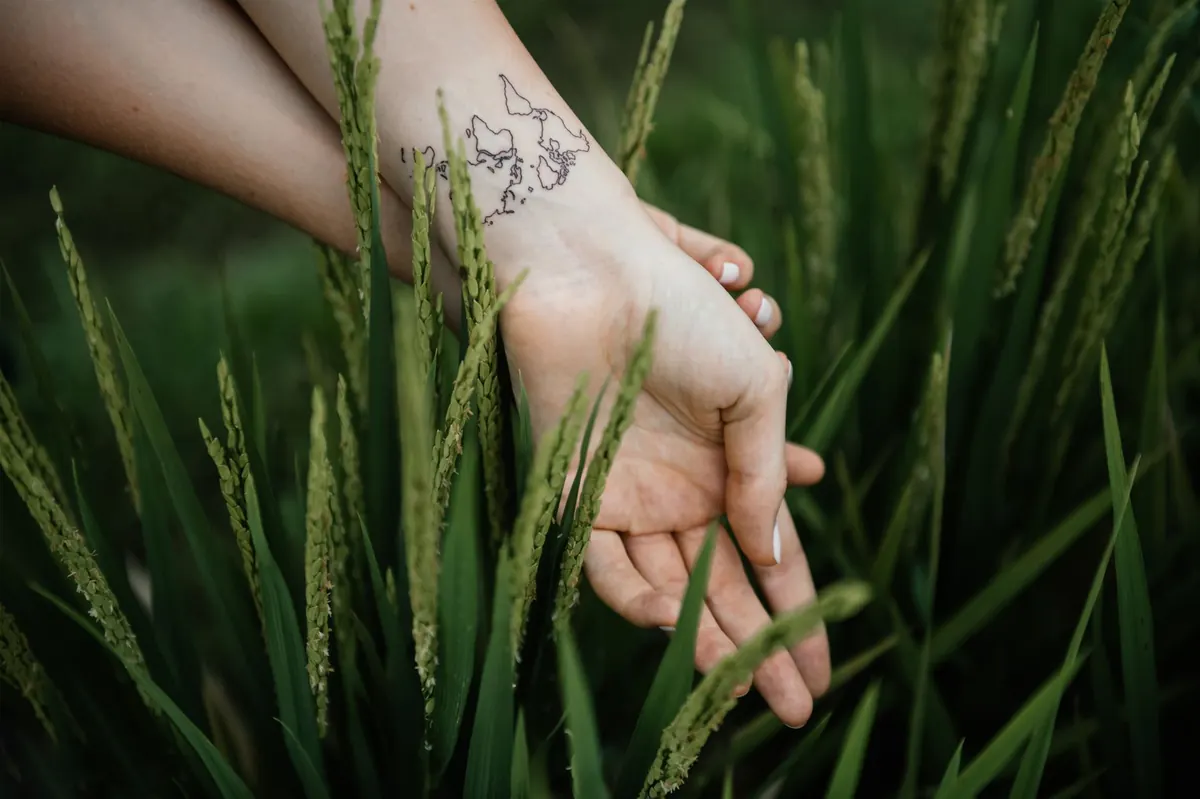
A small tattoo looks like the easy option. A crescent moon behind the ear, three dots on the wrist, a single stem of lavender on the ankle. Twenty minutes in the chair, less money, less commitment, nothing you have to explain to your nan. Then five years pass and the moon is a grey smudge with a tail. Small does not mean simple. Compressing an image into a space the size of a thumbnail is one of the hardest things you can ask a tattoo artist to do well.
Every line in a tattoo is a needle entering living tissue at a chosen angle and depth. Skin is not paper, and it is not a screen. Ink is deposited in the dermis, and over the following months and years it shifts and spreads slightly. A line drawn a fraction of a millimetre wide has nowhere to spread into without losing its edges.
That is the whole problem with micro work in one sentence. The design has to be legible at a distance of thirty centimetres, on a curved surface, in a medium that will soften. An artist who specialises in fine line work is not just drawing smaller; they are balancing line weight, spacing and contrast against the way skin behaves. A design that ignores this will look sharp for a year and tired for the next twenty.
Where a tattoo sits matters more than its size. The variables are simple: how much sun it gets, how much friction it takes, how much the skin stretches over a lifetime, and whether the design is on a flat or curved surface.
If you have a specific spot in mind, take a photograph of it and show the artist before you book. Placement decisions are worth a conversation, not a guess made in the mirror.
Nobody can tell you exactly what a tattoo will feel like, but the mechanics give a decent idea. Areas close to bone with thin skin and dense nerve endings hurt most: ribs, sternum, the elbow ditch, the collarbone, hands, feet and the spine. Muscular areas with thicker skin tend to be more tolerable: the outer upper arm, thigh, calf and upper back.
The advantage of a small tattoo is timing. A short session is far easier to sit through than a three-hour one, and most people find the second half harder than the first because adrenaline fades. Fine needles can feel scratchier and sharper than a broader liner, more like a cat scratch than a dull throb. Eat properly beforehand, avoid alcohol for a day or two before, and don't book during a period when you're run down.
Two things happen as a tattoo ages. The ink spreads slightly, and the skin around it changes. Collagen thins, elasticity reduces, and sun damage accumulates. Lines that were crisp at the start may sit closer together than they once did. Colour fades, especially paler tones, and sun exposure accelerates all of it.
This is why tiny text is the most common regret in this category. A whole sentence in a space the size of a thumbprint has no room to blur without becoming illegible. A name is fine. A line of poetry usually is not, unless it is set considerably larger than most people picture.
Black and high-contrast grey work holds up best. Very fine single-needle detail can look beautiful on the day and vague later. This does not mean avoiding delicate tattoos, only choosing them with the knowledge that they are a long-term commitment to a soft-edged look.
Ask the artist what their minimum line weight is, and what they recommend for the placement you want. A slightly bolder line in a small design will still read as delicate, and it will survive far better. Leave gaps between elements. Gaps that look generous on paper close up on skin.
The best small tattoos read as a shape before they read as a detail. Test your design by squinting at it or shrinking it on screen. If it turns into a blob, simplify it. Fewer elements, stronger shapes, more negative space.
A perfectly straight line drawn on an arm or a calf will only look straight in one position. Movement and muscle flex change how a design sits. Think about how your placement looks when you are walking, typing or sitting, not just standing still in front of a mirror.
Follow the aftercare instructions your artist gives you rather than anything you read online, including here. Keep the area clean, avoid soaking it in baths or pools while it heals, keep it out of direct sun, and resist the urge to pick at any flaking. Sunscreen on a healed tattoo, every summer, is the single most effective thing you can do to protect the detail you paid for.
Small fine-line tattoos often need a touch-up once healed, and many artists include one in their terms. Ask about this before you book. If you have a skin condition, a tendency to keloid scarring, or take medication that affects healing, speak to a doctor first. For any health concern, medical advice beats internet advice.
Turn up prepared and you will get better work. Ask the studio whether they are registered with the local council, confirm that needles and inks are single-use, and look at healed photographs of the artist's fine line work rather than only fresh photos. Fresh tattoos are flattering; healed ones tell the truth.
Take a printed or scaled reference, be honest about your budget and time, and be willing to hear that a design needs simplifying or enlarging. The artists who say no to an impossible request are usually the ones worth waiting for. A small tattoo is still permanent, and the best time to make a good decision about it is before the needle comes out of the packet.
Photo: SHVETS production / Pexels
Vegan tattoos involve more than ink — stencil fluid, gloves and aftercare all count. Here's what to ask your artist...
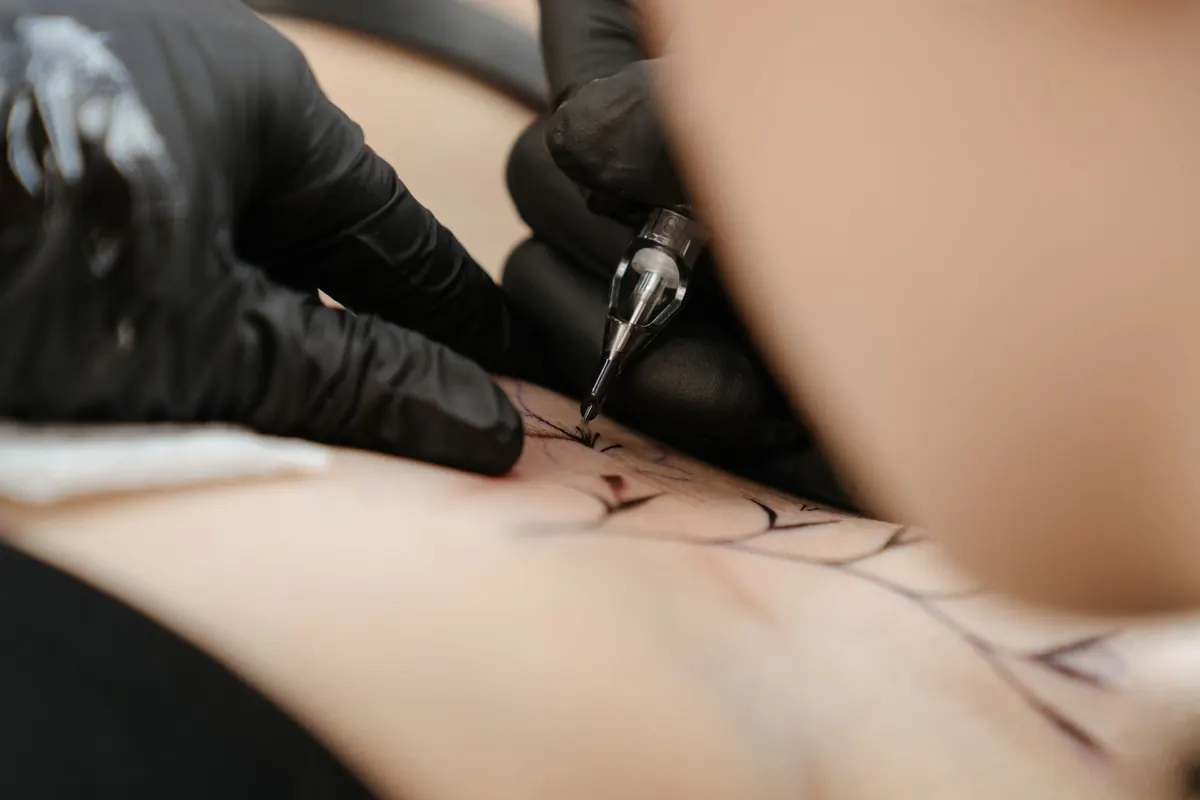
A practical guide to tattoo pain by placement, from sharp ribs and sternum to tender ankles and feet, plus skin...

A season-by-season guide to UK tattoo conventions, from spring's regional shows to autumn's big-city flagships, with...

Your weekly dose of tattoo culture and news..
