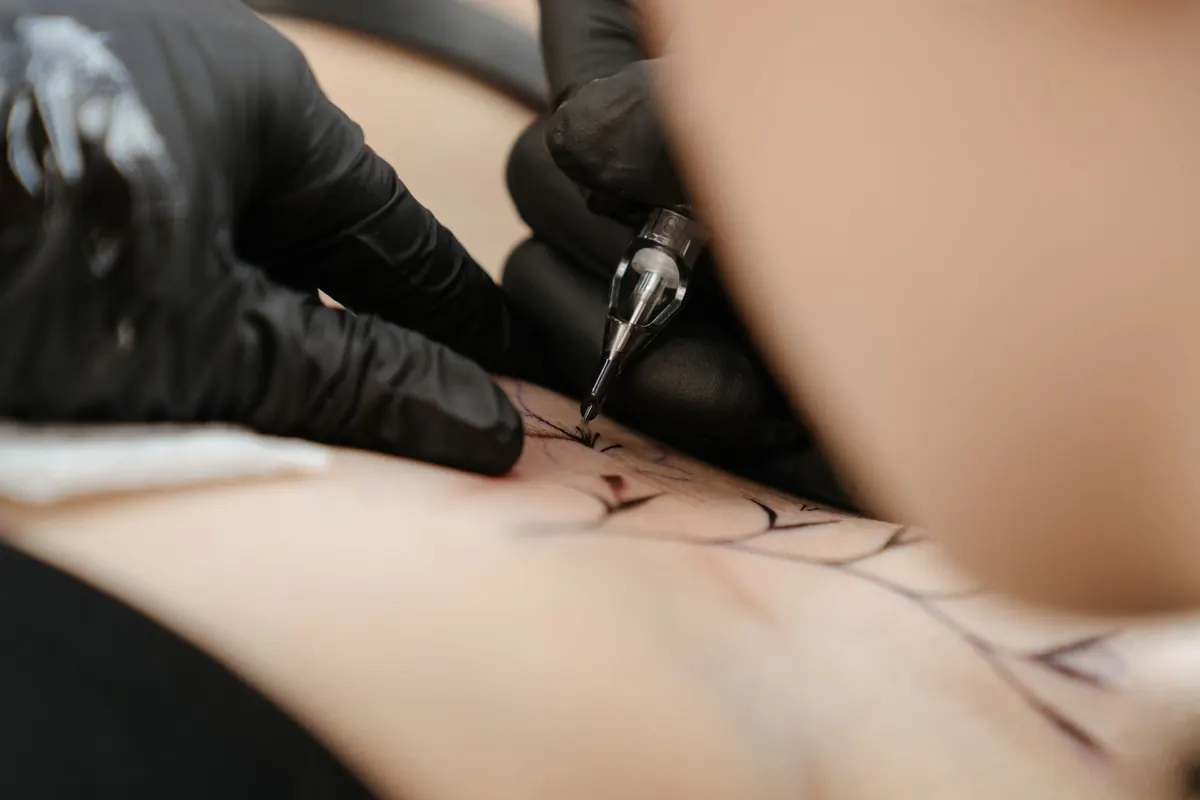
Ask five tattooed people which placement hurt most and you will get five different answers, delivered with feeling. Pain is personal. Your anatomy, your tattoo history and how well you slept the night before all shift the dial. Even so, most artists and collectors agree on a rough order. Nerve endings cluster in certain places, skin thins over others, and some spots sit right on top of bone. Here is how popular placements compare, from ribs down to ankles, and what each one asks of you afterwards.
Before the comparisons, it helps to know why some spots bite harder than others. Four things do most of the work:
Your artist's technique matters too, and so does your own state on the day. Eat properly beforehand, drink water, skip alcohol for 24 hours, and say something if you are nervous. They would rather adjust the plan than watch you go grey at the edges.
Ribs have a reputation for a reason. The skin is thin, the bones are close, and every breath moves the area under the needle. Most people describe a hot, wire-like sting that radiates around the ribcage, followed by a deep ache. Sessions are often broken into shorter blocks because the body tenses.
The sternum is a similar story with less give. Straight down the centre of the chest, the needle rattles against bone, and that vibration is what people remember. Along the spine, many artists prefer to work either side of the vertebrae rather than over the ridge itself, partly for comfort and partly for how the tattoo settles as it heals.
Aftercare here is awkward. A bra strap, waistband or seatbelt can rub a fresh rib tattoo, and sleeping on that side may be off the cards for a few nights. Loose, soft clothing helps, as does sleeping on the opposite side with a clean towel over the sheet.
Arms are where most first tattoos happen, and the range is wide.
Outer upper arm and shoulder. Comfortable for most people. The skin is reasonably thick, muscle cushions the needle, and you can sit still easily.
Outer forearm. Slightly sharper, especially near the elbow, but manageable, and it heals well because you can keep it clean and uncovered.
Inner bicep and inner forearm. Softer skin, more nerve endings, and a thin, tender feel that catches people out. Expect flinching near the wrist and the crease of the elbow. The elbow ditch — the soft hollow — is one of the sharper spots on the body.
Healing on arms is usually straightforward. The main irritants are sleeves, desk edges and gym equipment. Keep the fresh area off shared surfaces and wash your hands before touching it.
Legs are a mixed bag. Outer thigh is one of the gentler large areas: plenty of padding, easy to reach, simple to keep clean. Inner thigh is softer and more sensitive, and many people find it surprisingly intense.
The knee and the back of the knee are the leg equivalent of the elbow ditch — sharp, quick to swell, slow to settle. The calf sits in the middle: a dull, aching pain rather than a sting, made worse near the Achilles tendon or the bony shin.
Aftercare snags here usually mean trousers. Anything fitted will rub, and a fresh knee tattoo does not enjoy bending. Shorts, skirts or loose joggers for the first week make a real difference.
Ankles are small, bony and close to the surface, so the needle feels direct. The ankle bone itself is sharp; the area just above it is more forgiving. Feet are tougher still, particularly the top of the foot and the toes, where skin is thin and nerves are dense. Swelling is common, and shoes become a problem within hours.
Plan around your footwear. If you are having an ankle or foot piece done, wear something open and loose to the appointment and expect to live in it for a few days. Elevating the foot in the evening eases the throbbing, and keeping the area clean matters more than usual because socks and floors are constant company.
Not every placement behaves the same way on every body. Skin that is thin, sun-damaged or mature tends to bruise and swell more. Stretch marks, scars, moles and areas affected by eczema or psoriasis need a conversation with your artist before anything is booked, and often with a GP or dermatologist first. If you have a skin condition, a bleeding disorder, or you take medication that affects healing, get proper medical advice rather than relying on forum posts.
Aftercare difficulty roughly follows the same map as pain:
Wherever you are tattooed, the basics do not change: clean hands, gentle washing, a thin layer of whatever your artist recommends, no picking, no scratching, no swimming, no sun. Hands and feet also fade faster because they are used and washed constantly, so expect a touch-up somewhere down the line.
Pain is only half the decision. A tattoo you cannot look after for two weeks will not heal as well as one you can.
If a healing tattoo becomes hot, angry, weepy or painful in a way that worries you, speak to a pharmacist or GP. Skin infections are treatable, but they are not something to wait out.
Photo: cottonbro studio / Pexels
Vegan tattoos involve more than ink — stencil fluid, gloves and aftercare all count. Here's what to ask your artist...

A season-by-season guide to UK tattoo conventions, from spring's regional shows to autumn's big-city flagships, with...
A practical guide to UK tattoo licensing, age rules, ink regulation and hygiene standards — plus the questions worth...

Your weekly dose of tattoo culture and news..
