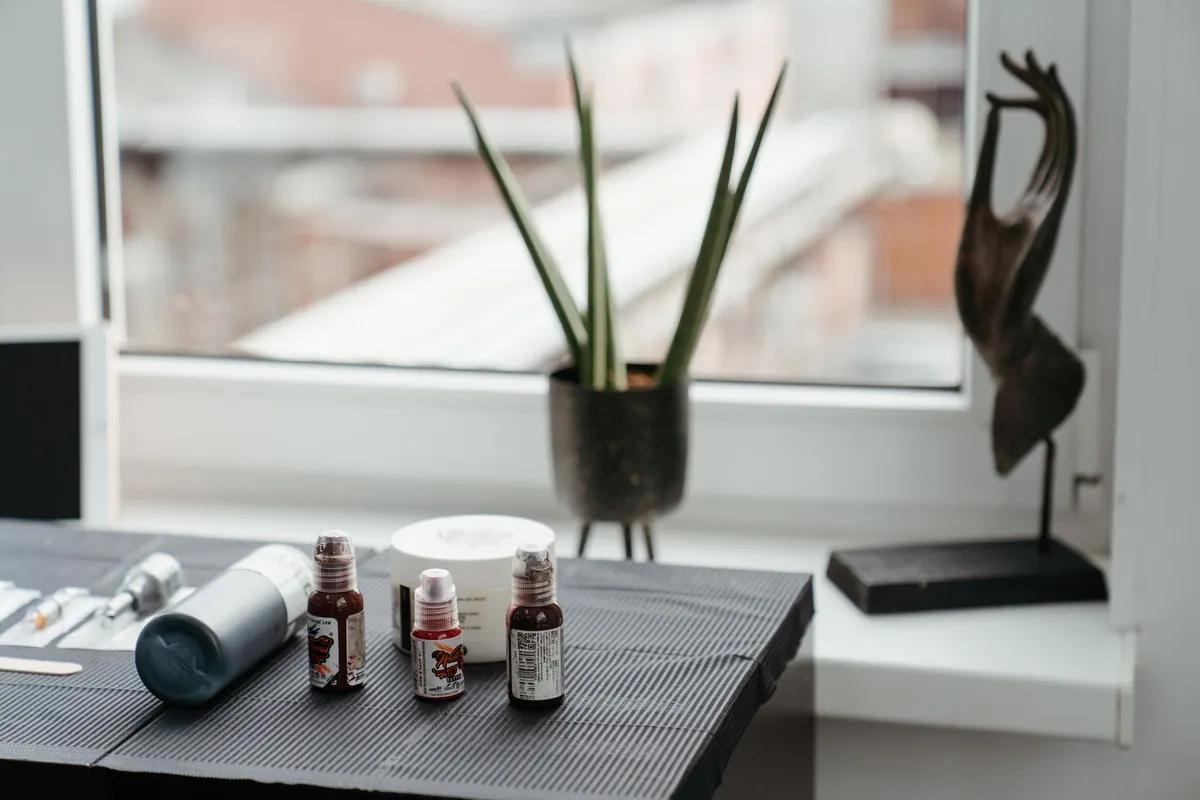
So you have found an artist whose linework you love, you have settled on a design, and you would rather your new tattoo did not contain animal by-products. Fair enough. The catch is that "vegan tattoo" can mean slightly different things depending on who is saying it, and the ink itself is only one part of the picture. Here is how to ask the right questions before you commit.
Tattoo ink is not just colour. A pigment is suspended in a carrier liquid, with binders and preservatives holding the mix together and keeping it stable on the shelf. Any of those components can be animal-derived, and historically quite a few have been.
Black pigment, for example, has traditionally been made from bone char — animal bones burned at high temperature. Reds and pinks have used carmine, a dye produced from cochineal insects. Shellac, a resin secreted by lac insects, turns up as a binder or glazing agent. Glycerine can be animal-derived or vegetable; lanolin comes from sheep's wool; gelatin, beeswax and tallow have all appeared in formulations at some point.
A vegan ink replaces those with plant-derived glycerine, synthetic or mineral pigments and non-animal resins, and is made without animal testing. Worth knowing: "vegan" is not a tightly protected term on an ink bottle in the way some food labelling is. Some manufacturers have their ranges certified by an organisation such as The Vegan Society. Others simply make the claim on their own website. Ask which one applies to the ink your artist actually uses.
Clients tend to focus hard on pigment and then forget everything else on the tray. If being vegan matters to you, these are the things to check too:
None of this is a reason to panic. It is simply the honest answer to "is my tattoo vegan?" The ink might be. The whole appointment might not be.
Send these by message or email, before you pay a deposit. It is a normal request and most artists would rather field it early than discover it halfway through a session.
Be prepared for "I am not sure" as an answer. A good artist will go and check rather than guess, and a studio that stocks vegan-friendly supplies will usually be able to tell you straight away.
A vegan formulation means no animal ingredients. It does not mean hypoallergenic, and it does not mean your skin will definitely be fine with it. Pigments, preservatives and carriers all have the potential to irritate, and some colours — reds and yellows in particular — are more often linked to reactions than others.
If you have eczema, psoriasis, a tendency to keloid scarring, or you have reacted badly to cosmetics or hair dye before, speak to your GP or a dermatologist before you book. That is general advice, not a diagnosis, but it is the sensible order of things.
You should also not expect vegan inks to fade faster or heal differently. There is no good reason to assume that. What can change is availability: pigment rules have tightened in recent years, and a colour your artist used five years ago may simply no longer be on the market.
Healing matters more than principle here. A beautifully vegan tattoo that you let dry out, scratch or expose to the sun will still end up looking rough. Follow your artist's instructions first, and apply the vegan bit on top of that.
Most standard aftercare balms contain beeswax or lanolin, so check the label rather than the front of the tube. Plant-based options are widely available, but keep the basics in mind: thin layers, clean hands, no soaking in baths or swimming pools while it is healing, no picking at scabs, and no sun on fresh work. If a product stings, burns or brings up a rash, stop using it and speak to your artist or a pharmacist rather than pushing through.
Write your questions down in one message, send them before you pay anything, and ask what the studio has in stock for aftercare so you are not left hunting for a vegan balm on the way home. Confirm that the studio is registered with its local authority, as you would for any booking.
And keep a little perspective. Vegan inks have come a long way, and plenty of UK artists now work with them as standard. If a particular studio cannot meet your requirements, that is genuinely useful to know now — in a message thread — rather than in the chair with the needle already out.
Photo: cottonbro studio / Pexels
A practical guide to tattoo pain by placement, from sharp ribs and sternum to tender ankles and feet, plus skin...

A season-by-season guide to UK tattoo conventions, from spring's regional shows to autumn's big-city flagships, with...
A practical guide to UK tattoo licensing, age rules, ink regulation and hygiene standards — plus the questions worth...

Your weekly dose of tattoo culture and news..
